
Keynote Speakers of ISCTIS 2026

Prof. Gang FENG, City University of Hong Kong, China
(IEEE Fellow, Chair Professor)
Bio: Gang Feng received the B.Eng and M.Eng. Degrees in Automatic Control from Nanjing Aeronautical Institute, China in 1982 and in 1984 respectively, and the Ph.D. degree in Electrical Engineering from the University of Melbourne, Australia in 1992. Professor Feng was a Lecturer/Senior Lecturer at University of New South Wales, 1992-1999. He has been with City University of Hong Kong since 2000, where he is now a Chair Professor of Mechatronic Engineering and the director of Centre for Robotics and Automation. He has received the IEEE Computational Intelligence Society Fuzzy Systems Pioneer Award, the IEEE Transactions on Fuzzy Systems Outstanding Paper Award, the outstanding research award and President award of City University of Hong Kong, and several best conference paper awards. He is listed as a SCI highly cited researcher by Clarivate Analytics since 2016. His research interests include intelligent systems and control, networked control systems, and multi-agent systems and control. Professor Feng is a fellow of IEEE. He has been an Associate Editor of IEEE Trans. Automatic Control, IEEE Trans. on Fuzzy Systems, IEEE Trans. Systems, Man, & Cybernetics, Mechatronics, Journal of Systems Science & Complexity, Journal of Guidance, Navigation & Control, and Journal of Control Theory and Applications. He is also on the advisory board of Unmanned Systems.
Speech Title: Our Recent Research on Cooperative Control of Multi-Agent Systems
Abstract: This talk consists of two parts. The first part presents an overview of our recent research on cooperative control of multi-agent systems, including event-triggered cooperative control, coverage control and entrapping control, cooperative control under communication delays, cooperative adaptive control with unknown agent dynamics, and cooperative control under DoS attacks. The second part presents a particular work on finite-time cooperative output regulation for heterogeneous linear multi-agent systems under DoS attacks. A novel distributed finite-time observer is first proposed for each agent to estimate the state of the exosystem by taking into consideration of DoS attacks. Then, a novel distributed resilient finite-time controller is further developed. It is shown that the regulated output semi-globally converges to zero in finite time. In addition, an explicit upper bound for the finite convergence time of the regulated outputs is provided. Finally, a simulation example is provided to demonstrate the effectiveness of the proposed controller.
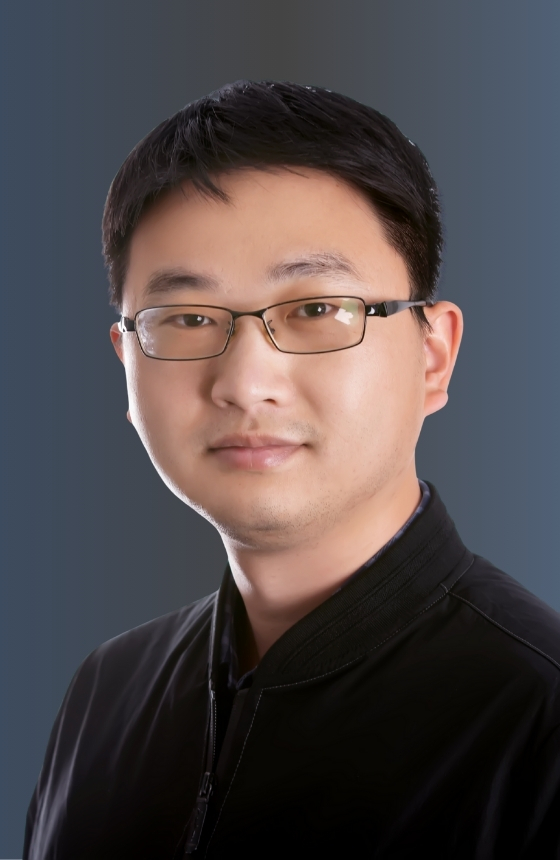
Prof. YANG Chenguang, The Hong Kong Polytechnic University, China
(IEEE Fellow, IET Fellow)
Bio: Professor Chenguang Yang (Charlie) received the B.Eng. in Measurement and Control Technology from Northwestern Polytechnical University, China, and the Ph.D. in Adaptive and Neural Network Control from the National University of Singapore. He completed postdoctoral research in human robotics at Imperial College London, UK. Previously, he held professorships at University of Liverpool, University of the West of England (UWE Bristol) as well as South China University of Technology. He was leading the Robotics and Autonomous Systems Group at University of Liverpool and was leading the Robot Teleoperation Group at Bristol Robotics Laboratory. He holds fellowships with Institute of Electrical and Electronics Engineers (IEEE), Institute of Engineering and Technology (IET), Institution of Mechanical Engineers (IMechE), Aisa-Pacific AI Association (AAIA), and British Computer Society (BCS). He is a member of European Academy of Sciences and Arts (EASA) and a member of National Academy of Artificial Intelligence (NAAI).
Speech Title: Human-like robot control, skill learning, and human–robot collaboration
Abstract: The presenter proposed a safe contact-control method with humanoid-like compliance adjustment, developed a generalization framework for skill learning in force–position coupled manipulation, investigated optimization mechanisms for personalized collaboration strategies, and developed human–robot collaboration techniques with dynamic adaptability. Addressing core bottlenecks in force-contact tasks—namely the lack of coupled representation of force and position information and the separation between skill learning and low-level control—he proposed a multi-modal, comprehensive skill primitive system covering motion, force control, stiffness, and manipulability, and established a unified skill representation for force–position coupled manipulation. The presenter’s work integrates adaptive control into skill learning algorithms, fully leveraging adaptive control’s ability to compensate for uncertainties and thereby enhancing skill generalization in previously unknown scenarios.

Prof. Pingyi Fan, Tsinghua University, China
(Academician of US-NAAI, Winner of NAAI 2025 AI Exploration Award, IET Fellow)
Bio: He is a tenured professor in the Department of Electronic Engineering at Tsinghua University, Director of the Open Source Data Cognitive Innovation Center, a Member (Academician) of the United States National Academy of Artificial Intelligence (US-NAAI) and the recipient of the NAAI 2025 AI Exploration Award & Outstanding Scientist Award, the Co-Chair of the Academic Committee of the NAAI Institute for Asia, the IET Fellow, and a member of the International Review Committee of IET Fellows. He received his Ph.D. from the Department of Electronic Engineering of Tsinghua University in 1994 and stayed on to teach. He has published more than 600 academic papers, including 181 IEEE journals and 16 ESI highly cited papers. He has applied for more than 40 national patents, 7 international patents, and published 5 academic works. He has won the Best Paper Award at 16 IEEE and other international conferences, including IEEE ICCCS 2024, ICC2020, and Globecom2014, the IEEE TAOS 2020 Best Paper Award, the 2024 High Impact Paper Award from the Chinese Journal of Electronics (CJE) of the Chinese Institute of Electronics, and the IEEE DCASE2024 Challenge Judge’s Award (DCASE2024 Challenge), AEIC (2023) Most Popular Scholar Award, IEEE TWC (2009) Excellent Editor Award, etc. He is currently on the editorial board of IEEE Transactions on Cognitive Communications and Networking (TCCN) (2024-2026), the editorial board of IAES international Journal of Artificial Intelligence (IJAI) (2023-2026), MDPI Section Editor-in-Chief of Electronics (2025-2027), The Chair of China 6G-ANA TG4 , etc. He has served as the General Chair, TPC Chairman or the Keynote Speaker more than 40 times at international conferences. His main research interests include 6G wireless communication networks and machine learning, semantic information theory and big data processing theory, and intelligent network and system detection.
Speech Title: Semantic Information Compression and Hallucination Manifestation
Abstract: In this report, we will analyzes AI hallucinations from the perspective of semantic compression. The report first explains AI methods of semantic information compression, which primarily aim to achieve compression efficiency, thereby sacrificing detail and fidelity. This may be one of the core reasons for the occurrence of 'hallucinations.' In fact, AI experiences information loss in the data compression processes, resulting in that when the model makes predictions, it 'guesses' in areas where it lacks knowledge rather than making 'statements' based on facts. That is to say, when decompressing to generate responses, AI fills in the information lost or distorted during compression with content that appears reasonable but is actually false, thereby causing hallucinations. Subsequently, we provide suggestions and methods to reduce or eliminate AI hallucinations. From an engineering perspective, design needs to be approached from multiple dimensions. For example, a combined strategy can be built using four types of methods: rule constraints, process intervention, external empowerment, and result verification, which respectively mitigate AI hallucinations by setting bottom lines, increasing costs, anchoring to facts, and exposing loopholes. Additionally, incorporating human checks serves as the final line of defense against AI's overconfident hallucinations. It is especially important to note that in high-risk areas, AI-generated content must undergo strict human verification.

Prof. Ying Tan, Peking University, China
Bio: Ying Tan is a full professor of Peking University, director of Computational Intelligence Laboratory at Peking University, and the inventor of Fireworks Algorithm (FWA). He worked as a professor of Faculty of Design, Kyushu University, Japan, in 2018, at Columbia University as senior research fellow in 2017, and at Chinese University of Hong Kong as research fellow, and at University of Science and Technology of China in 2005-2006 as a professor under the 100-talent program of CAS. He is the president of the IASEI, and also serves as the Editor-in-Chief of IASEI Transactions on Swarm Intelligence, and International Journal of Computational Intelligence and Pattern Recognition (IJCIPR), the Associate Editor of IEEE Transactions on Cybernetics (CYB), Neural Networks, International Journal of Swarm Intelligence Research (IJSIR), etc. He also served as an Editor of Springer’s Lecture Notes on Computer Science (LNCS) for 70+ volumes, and Guest Editors of several referred Journals, including IEEE/ACM Transactions on Computational Biology and Bioinformatics, Information Science, Neurocomputing, Natural Computing, Swarm and Evolutionary Optimization, etc. He is the founder general chair of theICSI International Conference series since 2010 and the DMBD conference series since 2016. He won the 2nd-Class Natural Science Award of China in 2009 and 2nd-Class Natural Science Award of Ministry of Education of China in 2019 and many best paper awards. His research interests include computational intelligence, swarm intelligence, deep neural networks, machine learning, data mining, intelligent information processing for information security and financial prediction, etc. He has published 400+ papers in refereed journals and conferences in these areas, and authored/co-authored 18 books, including “Fireworks Algorithm” by Springer in 2015, and “GPU-based Parallel Implementation of Swarm Intelligence Algorithms” by Morgan Kaufmann (Elsevier) in 2016, and received 8 invention patents.
Speech Title: Latest Progress of Novel Fireworks Algorithm (FWA) & Its Applications
Abstract: Recently, inspired from the collective behaviors of many swarm-based creatures in nature or social phenomena, swarm intelligence (SI) has been received attention and studied extensively, gradually becomes a class of efficiently intelligent optimization methods. Inspired by fireworks’ explosion in air, the so-called fireworks algorithm (FWA) was proposed in 2010. Since then, many improvements and beyond were proposed to increase the efficiency of FWA dramatically, furthermore, a variety of successful applications were reported to enrich the studies of FWA considerably. In this talk, the novel swarm intelligence algorithm, i.e., fireworks algorithm, is briefly introduced and reviewed, then several effective improved algorithms are highlighted, individually. In addition, the multi-objective fireworks algorithm and the graphic processing unit (GPU) based FWA are also briefly presented, particularly the GPU-based FWA is able to speed up the optimization process extremely. Extensive experiments on benchmark functions demonstrate that the improved algorithms significantly increase the accuracy of found solutions, yet decrease the running time sharply. Finally, several typical applications of FWA, in particular, for big-data application, are presented in detail.

Prof. Leida Li, Xidian University,China
(National Young Talent)
Bio: Leida Li is a Full Professor at Xidian University, recognized as a National Young Talent. His research interests include computer vision, visual quality assessment, and computational aesthetics. He has published over 100 papers in top-tier journals and conferences like IEEE TPAMI, IEEE TIP, CVPR, ICCV, and AAAI, with about 10,000 citations. He has led five projects supported by the National Natural Science Foundation of China and has actively engaged in industry-academia collaborations with top companies such as Huawei, OPPO, and Tencent. He was awarded the "Outstanding Industry-Academia Collaboration Partner" by OPPO, and his research outcomes have been applied in smart phone and live-streaming cameras. He is an Associate Editor of IEEE Transactions on Image Processing (TIP) and Journal of Visual Communication and Image Representation (Best Associate Editor Award 2021/2023), and serves as Area Chair/Senior Program Committee member for top international conferences such as AAAI, IJCAI, and ACM MM. He is a Senior Member of IEEE/CCF/CSIG.
Speech Title: Fine-grained Visual Quality Assessment
Abstract: Visual quality assessment evaluates the perceptual quality of images by simulating the characteristics of the Human Visual System (HVS). As a common technology, it has important applications in many fields such as low-level vision, imaging optimization, smart photography, and AIGC. After more than 20 years of rapid development, a large number of algorithms have proposed. However, the existing methods typically suffer from insufficient discrimination ability when used in real-world environments. This keynote talk focuses on the key differences between coarse-grained and fine-grained visual quality assessment, the main research progress in fine-grained visual quality assessment in recent years, and future research directions.

Prof. Qiguang Miao, Xidian University, China
(IEEE Senior Member)
Bio: Director of the Professor Committee and Doctoral Supervisor at the School of Computer Science and Technology, also serving as Director of the Informatization Promotion Office. He holds multiple key roles, including member of the Ministry of Education's Teaching Steering Committee for Educational Technology and AI, Deputy Director of the Key Laboratory of Collaborative Intelligence Systems (MOE), and Director of the Xi’an Key Laboratory of Big Data and Visual Intelligence. Recognized with honors such as "Outstanding Cyberspace Talent" from the Cyberspace Administration, "New Century Excellent Talents" from the MOE, "Taishan Scholar" Industrial Innovation Leader, and Shaanxi Teaching Master, he has also been named to Stanford's "World’s Top 2% Scientists List." He is a CCF Board Member, Chair of CCF YOCSEF (2017–2018), and serves on several professional committees and expert panels, including engineering accreditation and teaching evaluation for the MOE and national satellite-ground integration projects. He is a CCF Distinguished Member and IEEE Senior Member.
Speech Title: Cross-Modal Digital Human Generation
Abstract: This report focuses on the topic of cross-modal digital human generation, systematically exploring key technologies in digital human modeling and generation. The research covers core directions such as fine-grained emotional facial expression generation, high-fidelity face modeling based on 3D Gaussian, and sign language keypoint generation. It aims to achieve comprehensive modeling and precise control from multiple input modalities—such as speech and text—to facial expressions and body movements. The study is dedicated to constructing a highly natural and controllable digital human generation framework, providing technical support for fields such as virtual reality, film production, and human-computer collaboration.

Prof. Minghua Zhao, Xi’an University of Technology, China
Bio: Professor at Xi'an University of Technology; PhD supervisor; Director of the Office of Information Management; Head of the National First-Class Major in Software Engineering; Distinguished Member of the Chinese Computer Society; Senior Member of the China Society of Image and Graphics; and Leader of the “Cross-Modal Visual Computing and Intelligent Decision-Making” Innovation and Entrepreneurship Team under the Shaanxi Province Sanqin Talents Special Support Program. She also serves as a council member of the China Society for Electronic Education, the Shaanxi Association of Women in Science and Technology, and the Shaanxi Computer Society. In recent years, he has led more than 20 research projects, including key projects funded by the National Natural Science Foundation of China and the Shaanxi Provincial Natural Science Foundation. He has published over 100 high-impact papers and holds more than 50 authorized national invention patents. He has received numerous provincial and ministerial-level awards, including the Second Prize for Technological Invention in Shaanxi Province and the Second Prize for Teaching Achievement in Shaanxi Province.
Speech Title: Research on video abnormal behavior detection for open scene edge computing
Abstract: With the widespread deployment of distributed visual perception systems, the surveillance video stream has shown explosive growth, which poses a double challenge to the generalization ability of video anomaly detection in open environments and the deployment efficiency of edge devices. The purpose of this report is to systematically introduce the research progress of video anomaly detection based on deep learning, focusing on key issues such as detection accuracy improvement, cross-domain generalization ability and model lightweight, and propose solutions from the perspectives of spatio-temporal feature modeling, motion semantic expression and state space reconstruction to cope with the complexity challenges faced by video anomaly detection in open environments.